How to Block Porn and Adult Sites on Any Device
The internet, despite its advantages, harbors real dangers. Flashy banners trick adults, and explicit content is only a wrong tap away from kids who are just looking for cartoons. Protecting children from early exposure to porn matters — and while some countries have introduced age verification laws, enforcement is patchy and easy to bypass. So the practical answer is to block it yourself.
This guide covers how to block porn websites on any device — Android, iPhone, Windows, Mac, Chromebook, gaming consoles, Smart TV, and your home router. Whether you’re setting up parental controls or just want a cleaner browsing experience, there’s a method here that fits.
Protect Your Family from Unsafe Content
Block adult sites and explicit pop-ups on all your devices — AdLock makes it simple
- Why Block Adult Websites
- How to Block Adult Websites: Overview
- 1. Search-Engine Filtering
- 2. DNS Filtering at Router Level
- 3. Block Porn Sites on Android
- 4. Block Porn Sites on iPhone & iPad
- 5. Block Porn Sites on Windows & Mac
- 6. Block Porn Sites on Chromebook
- 7. Block Porn Sites on Smart TVs
- 8. Block Porn Sites on Gaming Consoles
- 9. How to Keep the Block in Place
- Putting It Together
- FAQ
Why Block Adult Websites
People block adult content for different reasons. Parents do it to keep children from stumbling onto explicit material accidentally — one mistyped search term or one mislabeled YouTube thumbnail is all it takes. Schools and workplaces apply filters to remove distractions and keep their networks clean. Adult sites are also among the most tracker-heavy and malware-prone categories on the web, so blocking them doubles as a security measure. And for anyone trying to reduce their own consumption, a technical barrier adds real friction that willpower alone often doesn’t.
How to Block Adult Websites: Overview
No single method covers everything perfectly. The most reliable approach layers two or three together. Here’s a quick map before we go deeper:
- SafeSearch — removes explicit results from search engines; easy but doesn’t block direct URL access.
- DNS filtering — blocks adult domains at the network level; can cover every device on your Wi-Fi — phones, tablets, computers, Smart TVs, gaming consoles — with a single router change.
- Platform parental controls — built into Android, iOS, Windows, macOS, and Chromebook; free and lockable with a separate PIN.
- App-level blockers — operate at the network layer on the device itself; catch what DNS and SafeSearch miss, including in-app content.
Most of the methods below are free. The goal is to pick what fits your setup and use at least two in combination.
1. Search-Engine Filtering
This is the easiest starting point. Enabling SafeSearch stops explicit results from appearing in Google — it won’t block the actual sites, but it removes the most common accidental entry point.
Google SafeSearch
- Go to Google.com and sign in.
- Click Settings > Search settings.
- Turn on SafeSearch to filter out explicit images, videos, and websites.
- Click Save.
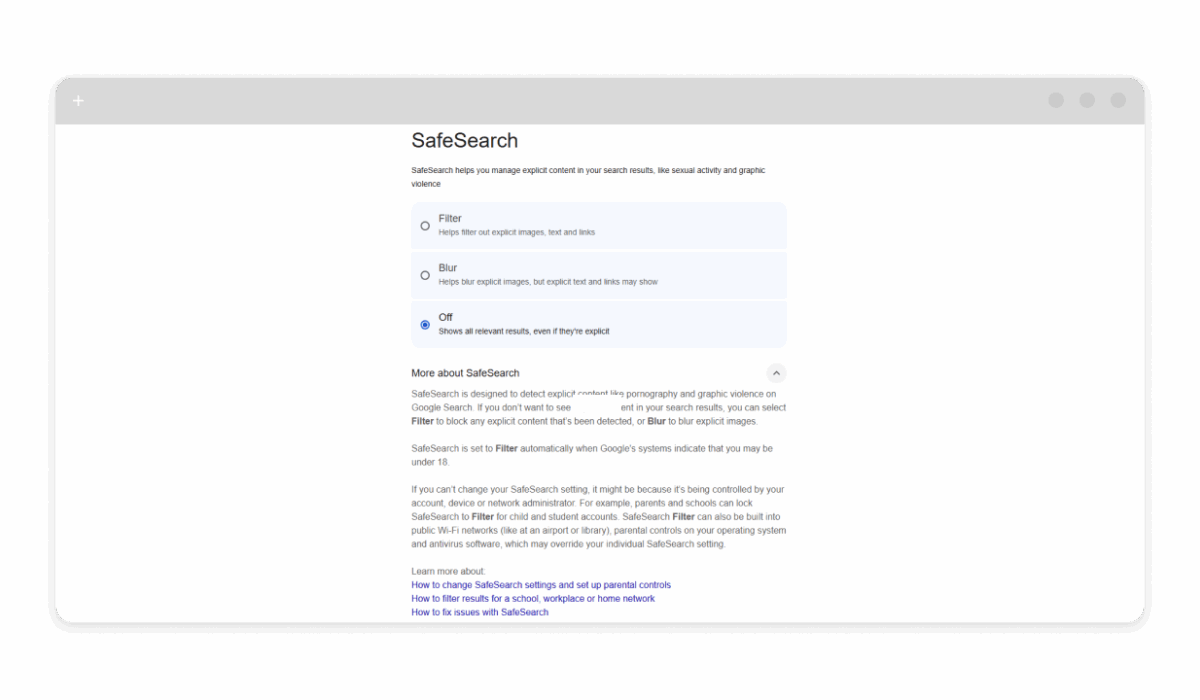
✅ A lightweight porn site filter that takes 30 seconds to set up. Won’t block direct URL access, but removes most discovery paths.
YouTube Restricted Mode
- Open YouTube and sign in.
- Click your profile icon > Restricted Mode.
- Toggle Activate Restricted Mode ON.
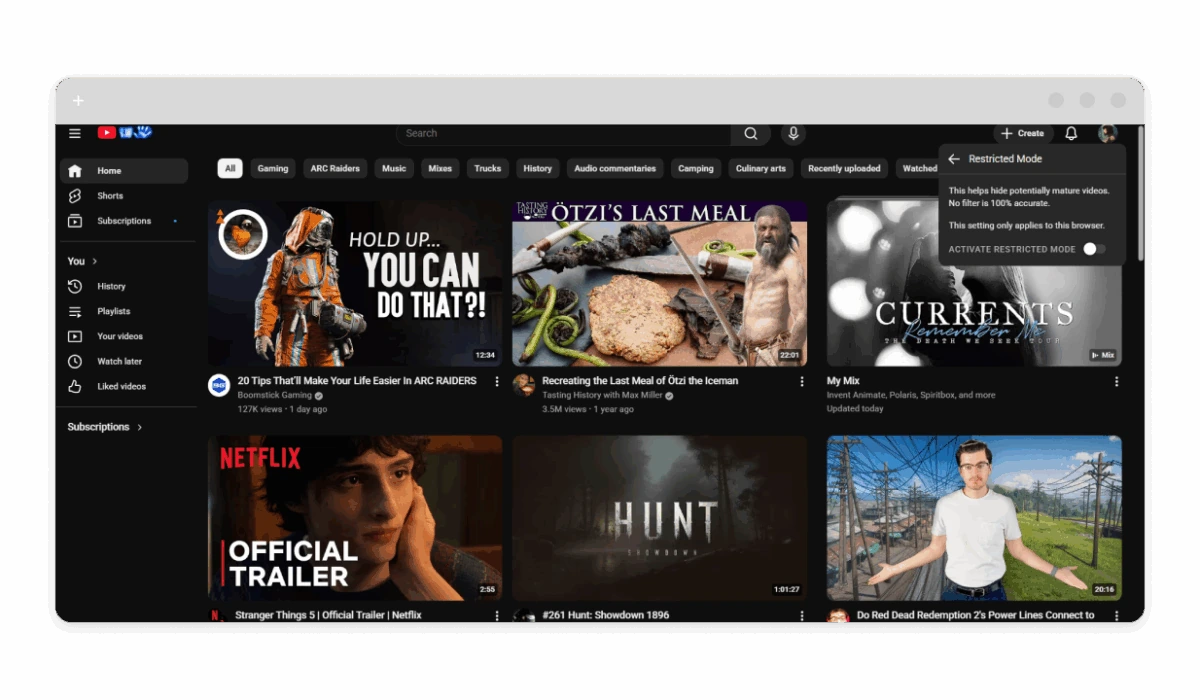
🔒 Works on both mobile and desktop browsers. Hides explicit videos and filters search suggestions inside YouTube. Note that Restricted Mode is per-browser — a user who opens a different browser won’t have it active there.
2. DNS Filtering at Router Level
Changing your router’s DNS is the most efficient way to block porn sites across your entire home network. Every phone, tablet, laptop, Smart TV, and gaming console connected to your Wi-Fi gets filtered automatically — no apps needed on individual devices.
How to access your router’s admin panel
The exact path varies by brand. Most residential routers use a browser-based admin panel:
- TP-Link: open a browser and go to
router.tp-link.comor192.168.0.1 - ASUS:
router.asus.comor192.168.1.1 - Netgear:
routerlogin.net - Linksys:
192.168.1.1ormyrouter.local - Eero: DNS changes are made in the Eero app — go to Settings > Network Settings > DNS
If your ISP supplied the router, the admin login credentials are usually printed on a sticker on the device itself. You’ll need the admin password — not the Wi-Fi password.
DNS addresses to use
- CleanBrowsing Family Filter —
185.228.168.168/185.228.169.168 - OpenDNS FamilyShield —
208.67.222.123/208.67.220.123 - NextDNS — configure a custom profile at nextdns.io and use the assigned addresses; gives you a dashboard with per-device filtering, query logs, and granular block categories
Steps:
- Log in to your router’s admin panel.
- Find the DNS settings section (usually under WAN, Internet, or Advanced settings).
- Replace the current DNS entries with your chosen family-safe addresses.
- Save changes and restart the router.
🔐 This blocks porn on Android, iPhone, laptops, and Smart TVs simultaneously — without touching a single device setting. The one gap: devices that switch to mobile data bypass your router’s DNS entirely. That’s where the per-device settings below pick up.
3. Block Porn Sites on Android
Android has a built-in Private DNS feature that works system-wide — covering all browsers and apps, not just one. No root required, no paid tools needed.
Private DNS (No App Needed)
- Go to Settings > Network & Internet > Private DNS.
- Choose Private DNS provider hostname.
- Enter
family-filter-dns.cleanbrowsing.orgor your NextDNS hostname from your nextdns.io profile. - Tap Save.
✅ Blocks adult domains across every app on the device — including social apps, browsers, and anything else making DNS requests. This setting travels with the device onto mobile data, unlike router-level DNS.
Google Family Link
If you’re managing a child’s Android device rather than your own, Google Family Link gives you remote supervision. You can approve app downloads, set daily screen time limits, lock the device remotely, and apply content filters across Google Search and Chrome. Set it up at families.google.com and install the Family Link app on both devices.
Browser-Level Blocking
Browser-level filtering alone won’t stop a determined user — it only covers that one browser, and switching apps bypasses it entirely. Combine it with Private DNS, or use AdLock for Android, which filters at the network level and covers all apps, not just the browser.
4. Block Porn Sites on iPhone & iPad
iOS has strong built-in parental controls. Screen Time can restrict adult content across Safari and third-party browsers — and you can lock the settings with a separate passcode so they can’t be undone.
Screen Time Restrictions
- Go to Settings > Screen Time.
- Tap Turn On Screen Time if it isn’t enabled, then select This is My Child’s iPhone (or set a passcode if it’s your own).
- Go to Content & Privacy Restrictions and enable it.
- Tap Content Restrictions > Web Content.
- Select Limit Adult Websites.
🛡 Built-in and free. Works in Safari and limits access through most third-party browsers too. Set a Screen Time passcode that’s different from the device unlock code — otherwise the restriction can simply be toggled off.
For persistent filtering across both Wi-Fi and mobile data, NextDNS offers a downloadable configuration profile at nextdns.io. Installing it applies DNS-level filtering at the system level on iOS, independent of which browser or app is being used.
Safari Content Blockers
Screen Time catches most adult sites, but explicit pop-ups and adult ad networks sometimes slip through. A dedicated ad blocker for iPhone like AdLock fills that gap — it blocks adult advertising and trackers that content restrictions don’t cover. Install it from the App Store, then enable it under Settings > Safari > Extensions.
5. Block Porn Sites on Windows & Mac
Both Windows and macOS have native options for blocking adult content, and neither requires third-party software to get started.
Windows
- Go to Settings > Accounts > Family & other users.
- Create or sign in with a Microsoft Family account.
- Enable Content Filters > Block inappropriate websites.
Alternatively, change your DNS via Control Panel > Network and Sharing Center > Change adapter settings — right-click your connection, select Properties, then IPv4 Settings, and enter CleanBrowsing or NextDNS addresses. This filters all browsers and apps, not just Edge. Make sure the child’s Windows account doesn’t have administrator privileges, so they can’t undo the change.
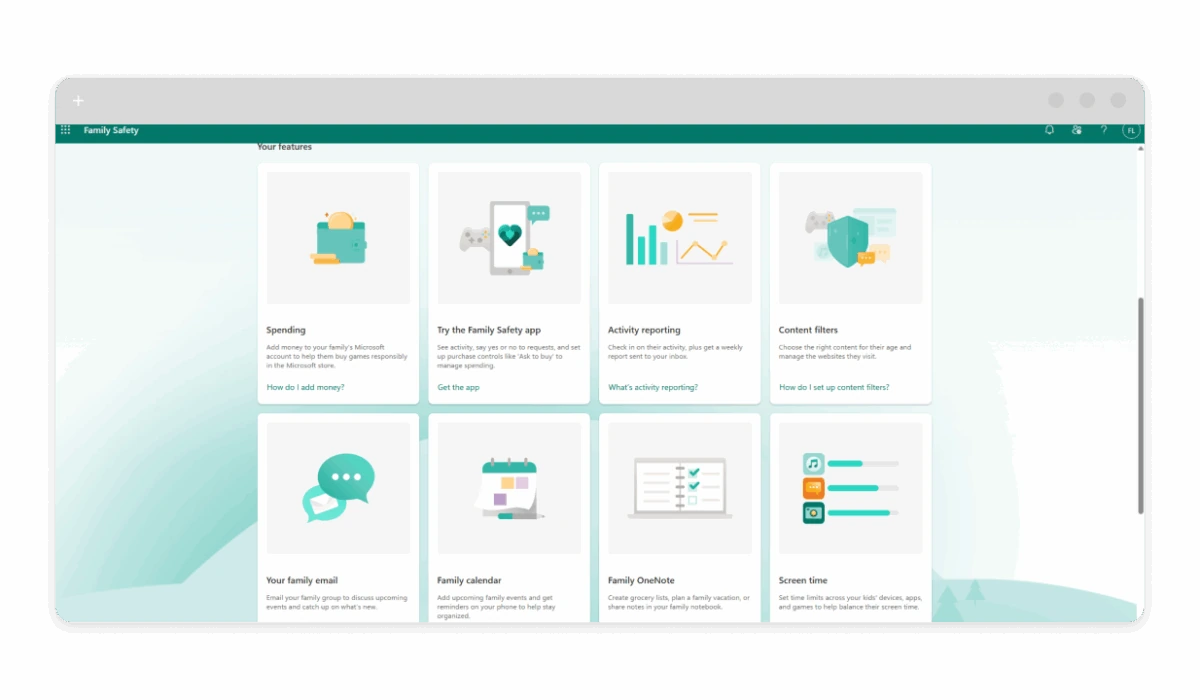
🖥 Works with Chrome and Edge out of the box via Microsoft Family Safety. For stronger filtering that covers all apps — not just browsers — AdLock for Windows operates at the network level and doesn’t depend on which browser the user opens.
macOS
- Go to System Settings > Screen Time > Content & Privacy.
- Enable Limit Adult Websites.
- Optionally, go to System Settings > Network > your connection > DNS and add
1.1.1.3(Cloudflare for Families) and185.228.168.168(CleanBrowsing).
🍎 Screen Time on macOS mirrors iOS. Lock it with a separate passcode — go to System Settings > Screen Time > Lock Screen Time Settings. If you’re setting this up for a child, create a separate limited macOS user account for them so they can’t access admin-level network settings. For network-wide filtering that covers every browser and app, AdLock for Mac handles it at the system level without requiring per-app configuration.
6. Block Porn Sites on Chromebook
Chromebooks have two reliable approaches depending on whether the device is used by a child or an adult.
Google Family Link (for child accounts)
Family Link works on Chromebooks the same way it does on Android. Set it up at families.google.com and install the app on your phone. The child signs in to the Chromebook with their supervised Google account — SafeSearch gets locked automatically, explicit sites are blocked through Google’s filters, and you can approve or deny extension installs remotely.
This is the cleanest option for a household Chromebook assigned to a child. The content restrictions follow the account, not the device — they apply whether the child signs in on your Chromebook or a friend’s.
Secure DNS (for personal Chromebooks)
If you’re filtering your own browsing without Family Link, configure DNS-over-HTTPS directly in Chrome:
- Go to
chrome://settings/security. - Under Use secure DNS, turn on the toggle.
- Select With Custom Provider.
- Enter your NextDNS DNS-over-HTTPS URL (found in your nextdns.io profile) or CleanBrowsing’s DoH endpoint.
This filters at the browser level. It won’t cover other apps running on the Chromebook, but for most browsing use cases it’s effective and takes under two minutes to configure.
7. Block Porn Sites on Smart TVs
Smart TVs can browse the web and access explicit content through their built-in browsers or streaming apps. DNS-level blocking handles this cleanly without needing to install anything on the TV itself.
DNS Method
On most Smart TVs, go to Settings > Network > IP Settings (or similar) and switch DNS from Automatic to Manual. Enter 1.1.1.3 (Cloudflare Family) or 185.228.168.168 (CleanBrowsing). The exact menu path varies by manufacturer — check your TV’s manual if you can’t locate the DNS field.
Built-In Parental Controls
- Use PIN locks, content ratings, and app restrictions built into the TV platform.
- On Samsung Tizen TVs: Settings > Broadcasting > Program Rating Lock Settings.
- On LG webOS: Settings > Safety > TV Rating.
- On Android TV / Google TV: Settings > Device Preferences > Parental Controls.
📺 The DNS approach is the most reliable since it blocks at the network level. Built-in parental controls are a useful second layer for restricting streaming app content ratings and browser access.
8. Block Porn Sites on Gaming Consoles
Gaming consoles can access adult content through web browsers, social features, and streaming apps built into the platform. Each has its own parental control system.
PlayStation 4 and PS5
Set up Family Management at my.playstation.com. Create a family group, designate yourself as the family manager, and add your child’s PSN account (or create one for them). Under Parental Controls, set the Content Restriction Level — this limits which game ratings are accessible and restricts the browser. You’ll need a separate 4-digit parental control PIN that’s different from the account password.
On PS5 directly: Settings > Family and Parental Controls > PS5 Parental Controls. Here you can restrict web browsing, communication with other players, and content by rating.
Xbox One and Xbox Series X|S
Microsoft Family Safety covers Xbox. Add a child account at account.microsoft.com/family — the same content filters you set for Windows apply automatically on the Xbox when your child signs in. On the console: Settings > Account > Family settings. You can block mature-rated games, set spending limits, and restrict access to Microsoft Edge on Xbox.
Nintendo Switch
Download the Nintendo Switch Parental Controls app on your phone (iOS or Android). Open it, select Register Console, and follow the steps to pair it with the Switch using a one-time code. Once linked, set a PIN and choose a restriction level — or configure individual restrictions. The app shows daily playtime logs and lets you send a bedtime alarm to the Switch. Internet browsing can be disabled entirely through the app’s communication settings.
For all three platforms, the router-level DNS change from section 2 adds a network-wide layer on top of these built-in controls — so even if a console setting gets reset, the DNS still blocks adult domains.
9. How to Keep the Block in Place
DNS filtering and SafeSearch have known workarounds. Setting them up is only half the job — keeping them in place matters just as much.
Use a separate passcode for parental settings. On iOS, the Screen Time passcode must be different from the device unlock code — otherwise a child can toggle it off directly. On macOS, go to System Settings > Screen Time > Lock Screen Time Settings. On Windows, the child account shouldn’t have administrator privileges, so they can’t modify DNS or install software without approval.
Block VPN apps. A VPN encrypts traffic before it leaves the device, making DNS-level router filters useless. On Android, block VPN apps via Google Family Link. On iOS, go to Screen Time > Content & Privacy Restrictions > Allowed Apps and prevent VPN profile installs. On Windows, removing admin rights from the child’s account means software can’t be installed without your approval.
Apply DNS directly on mobile devices. Router DNS doesn’t follow a device onto mobile data. Set Private DNS directly on Android (Settings > Network & Internet > Private DNS) and use a NextDNS configuration profile on iOS, which persists across both Wi-Fi and mobile data.
Cover all browsers at the system level. A filter in Chrome doesn’t apply in Firefox. System-level controls — Private DNS on Android, Screen Time on iOS, Family Link app approvals — cover every browser at once. On Windows, use the child account setup to prevent installing new browsers without admin approval.
HTTPS isn’t a bypass. Some people assume that HTTPS sites can’t be blocked by DNS filtering. They can. DNS filtering blocks the domain before any connection is made — the site simply doesn’t resolve, regardless of whether it uses HTTP or HTTPS.
Read also:
Putting It Together
No single method is airtight on its own. SafeSearch removes most discovery paths through search engines. DNS filtering blocks domains network-wide — covering phones, laptops, Smart TVs, and gaming consoles with one router change. Platform parental controls lock settings in place with a PIN. Use at least two in combination.
The typical effective setup: DNS at the router level (covers everything on your network) plus Screen Time or Family Link on each device (covers mobile data, prevents settings changes, blocks VPN installs). Add a per-device DNS setting on mobile to close the mobile data gap.
If you want a tool that goes further — blocking adult pop-ups, trackers, and explicit ads across every browser and app, not just named domains — AdLock handles that at the network level on Android, iOS, Windows, and Mac without needing to configure each app individually. You can learn more about AdLock here.
Protect Your Family from Unsafe Content
Block adult sites and explicit pop-ups on all your devices — AdLock makes it simple
FAQ
How can I block all porn sites on Android?
Use Android’s Private DNS feature under Settings > Network & Internet > Private DNS and enter family-filter-dns.cleanbrowsing.org — it covers all browsers and apps at once. For deeper filtering including pop-ups and trackers, install AdLock for Android.
Is there a free porn blocker for iPhone?
Yes. iOS Screen Time with Content & Privacy Restrictions enabled and Limit Adult Websites selected is free and built-in. Lock it with a separate Screen Time passcode so it can’t be disabled without your code.
Can I block adult sites on my home network?
Yes — change the DNS on your router to CleanBrowsing (185.228.168.168) or OpenDNS FamilyShield (208.67.222.123). Every device on your Wi-Fi gets filtered automatically. NextDNS also works and lets you customize which categories are blocked through a web dashboard.
How do I block porn on a Chromebook?
For a child’s Chromebook, set up Google Family Link at families.google.com — it enforces SafeSearch and blocks adult sites automatically once the child signs in with their supervised account. For a personal Chromebook, go to chrome://settings/security, enable Use secure DNS, choose With Custom Provider, and enter a NextDNS or CleanBrowsing DNS-over-HTTPS address.
How do I block adult content on gaming consoles?
Each platform has its own system. On PS4/PS5, set up Family Management at my.playstation.com and configure a parental control PIN. On Xbox, add a child account via Microsoft Family Safety at account.microsoft.com/family — the same filters apply automatically on the console. On Nintendo Switch, use the Nintendo Switch Parental Controls app to set a PIN and disable internet browsing.
How do I block porn on a Smart TV?
Set your TV’s DNS to 1.1.1.3 (Cloudflare Family) in the network settings. You can find this under Settings > Network > IP Settings on most platforms. Also enable the TV’s built-in parental PIN lock to restrict browser and app access.
What is the most effective way to block porn across all devices?
DNS filtering at the router level covers every connected device with one change. Pair it with Screen Time or Family Link on individual devices — especially important if kids can switch to mobile data and bypass the router’s DNS entirely.
Can a VPN bypass porn blocking?
Yes — if a VPN is installed on the device, it encrypts traffic before your router’s DNS can see it, bypassing network-level filters. Block VPN apps using Google Family Link on Android or Screen Time app restrictions on iOS to close this gap.
Does DNS blocking work on HTTPS adult sites?
Yes. DNS filtering blocks the domain before any connection is made, regardless of whether the site uses HTTP or HTTPS. The site simply doesn’t resolve — the browser never reaches it.
How do I make porn blocking permanent so my child can’t undo it?
Set a Screen Time passcode on iOS or macOS that’s different from the device unlock code. On Windows, keep the child account on a standard (non-admin) user profile. Block VPN app installs via Family Link or Screen Time. Apply Private DNS at the device level so the filter applies on mobile data too — not just on your home Wi-Fi.