How to Stop Sites from Opening New Tabs Automatically
You’re on a news site. You tap a headline. Three new tabs open — none of them are the article you wanted. One is a fake lottery win. One is an app store page. One is something you’d rather not explain to whoever’s sitting next to you.
This is one of the most common browser complaints I hear, and it’s gotten significantly worse over the past couple of years. Publishers under ad revenue pressure let increasingly aggressive networks onto their sites. Those networks run scripts that fire new tabs on any interaction — clicks, touches, scrolls, sometimes even just cursor movement over certain areas.
Here’s how to stop it, across every major browser and platform.
Read the complete guide on how to remove ads from Chrome and forget commercials even exist!
Stop Chrome from Opening Random Tabs
AdLock blocks pop-ups, redirects, and shady scripts that hijack your browser
- Why Do Sites Open New Tabs Without Permission?
- The Fastest Fix for Chrome Desktop
- How to Stop Automatic Tabs in Chrome on Android
- Firefox: The Browser That Actually Handles This Well
- Edge, Safari, and Brave
- When Built-In Settings Don’t Cut It
- How to Tell If an Extension Is the Cause
- Summary: Stop New Tabs Before They Open
- FAQ
Why Do Sites Open New Tabs Without Permission?
Understanding the mechanism helps you pick the right fix.
The most common cause is JavaScript that hooks onto click events and uses window.open() to launch a new tab before your intended click registers. It’s specifically designed to slip past popup blockers by piggybacking on a genuine user interaction — the click you made to read an article technically counts as “user-initiated” from the browser’s perspective, which is why the built-in blocker often lets it through.
The second common cause is malicious or bloated browser extensions. A free extension that seemed harmless — a coupon finder, a weather widget, a tab manager — is intercepting your clicks and opening affiliate or ad pages in new tabs. These are harder to spot because they follow you across every site.
Third cause, less common: something installed at the OS level is injecting scripts into your browser traffic. This is adware territory and requires a different approach.
The Fastest Fix for Chrome Desktop
Chrome’s popup blocker is on by default but it has a critical gap: it doesn’t block new tabs opened as a result of user interaction (like a click), only “unprovoked” popups. Since most tab-opening scripts wait for a click to fire, they slip right through.
That said, start here:
Go to chrome://settings/content/popups. Check that blocking is on. More importantly — look at the “Allowed” list. If there are sites in there you don’t recognize, remove them immediately. Some sites add themselves to this list through tricky permission prompts that look like something else.
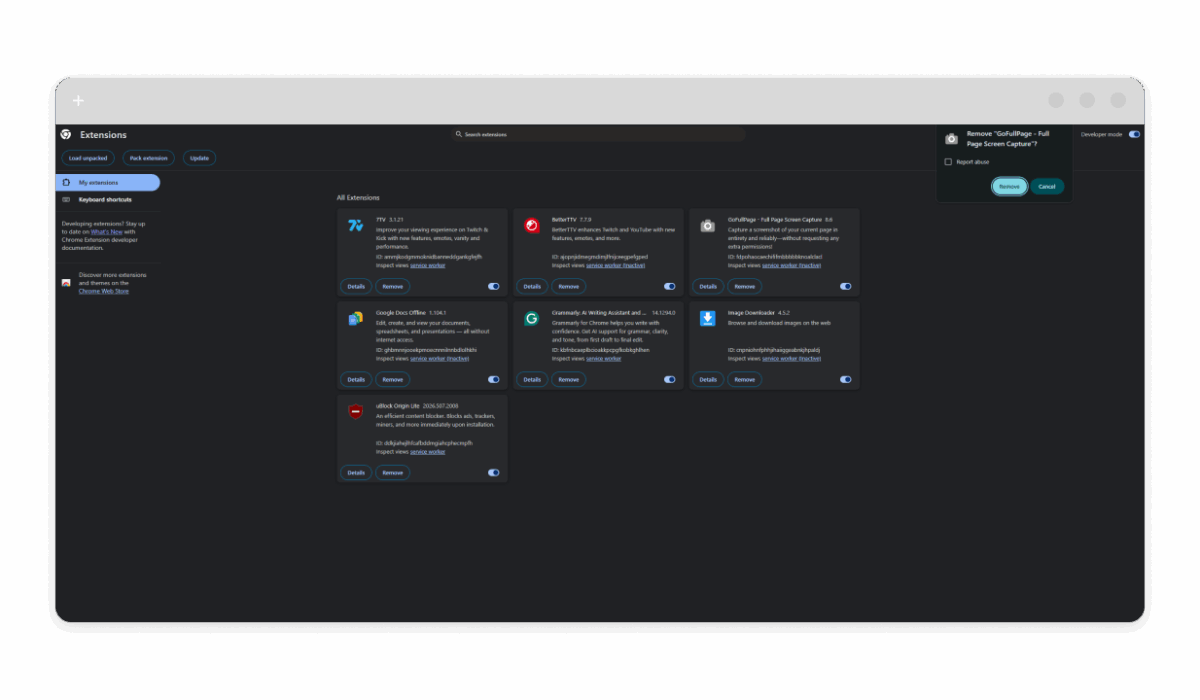
Then go to chrome://extensions/ and disable everything non-essential. Test if the problem stops. Re-enable extensions one at a time to find which one is responsible. This catches the majority of cases.
If tabs still open after extensions are cleared, run Chrome’s cleanup tool at chrome://settings/cleanup (Windows only). It specifically scans for software known to interfere with browser behavior.
How to Stop Automatic Tabs in Chrome on Android
Android is where this problem is worst. Mobile sites run far more aggressive scripts than desktop versions, and Chrome’s mobile settings are less obvious.
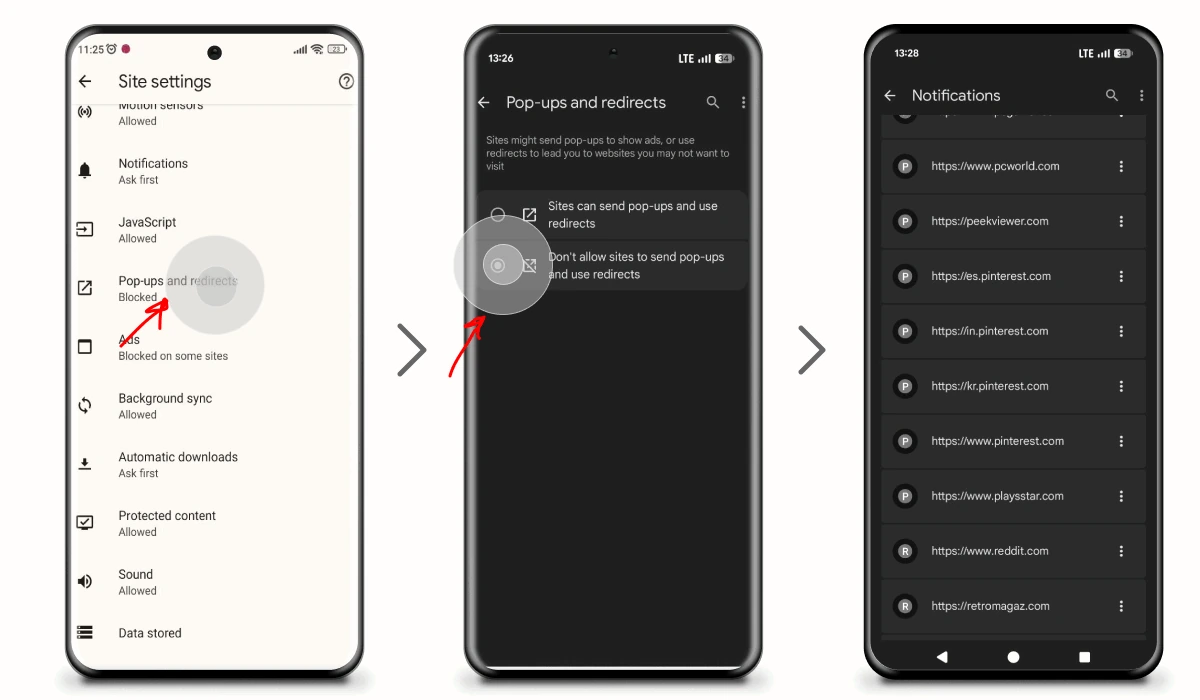
Open Chrome → three-dot menu → Settings → Site Settings → Pop-ups and redirects → Block. Then go back to Site Settings → Ads → Block.
One thing most guides miss: also go to Site Settings → Notifications and look at what sites have permission to send you notifications. Some sites abuse the notifications API to pop open new tabs through notification clicks. Revoke notification permission for any site you don’t actively use.
If tabs are opening even without you touching the screen, that’s a different signal — check Settings → Apps for anything recently installed that you don’t recognize. Some “free game” apps and utility apps contain adware that runs in the background and opens tabs periodically.
Firefox: The Browser That Actually Handles This Well
Firefox with Strict Enhanced Tracking Protection blocks a lot of tab-opening scripts that Chrome lets through, because many of them rely on cross-site tracking infrastructure that Firefox cuts off at the source.
Settings → Privacy & Security → Enhanced Tracking Protection → Strict. Also check Settings → Permissions → Block pop-up windows and make sure it’s enabled.
If you’re on Firefox and still seeing new tabs open, the culprit is almost certainly an add-on. Go to about:addons, disable everything, and re-enable one by one.
Edge, Safari, and Brave
Edge: Settings → Cookies and site permissions → Pop-ups and redirects → Block. Edge also has “Scareware Blocker” under Privacy, search and services → Security — turn it on, it specifically targets the kind of fake alert pages that auto-opening tabs often lead to.
Safari on Mac: Safari → Settings → Websites → Pop-up Windows → set to Block. On iPhone: Settings → Safari → Block Pop-ups (on).
Brave: blocks this behavior by default more aggressively than any other major browser. If you’re on Brave and still getting new tabs, check Settings → Privacy and Security → Block scripts — you may want to enable it for problematic sites.
When Built-In Settings Don’t Cut It
Here’s the honest truth: browser popup blockers were designed for a 2010-era internet where popups were obvious full-window things. In 2026, tab-opening scripts are specifically engineered to bypass them. They fire on legitimate click events, they use timing tricks, they exploit notification APIs — and the built-in blockers weren’t built to handle that.
AdLock solves this at a different layer. Instead of watching what the browser renders, it filters the network requests that load the scripts in the first place. The tab-opening script never downloads, so it never runs. This works across all browsers on the device simultaneously, without per-browser configuration.
It’s particularly effective on Android, where per-browser settings are limited and aggressive mobile ad networks are the main source of the problem.
How to Tell If an Extension Is the Cause
Quick test: open an incognito window (Ctrl+Shift+N in Chrome, Command+Shift+N on Mac). By default, extensions are disabled in incognito.
Browse to the same site that was opening new tabs. If the problem disappears in incognito, an extension is causing it. Go through your extensions list and disable them one at a time in normal mode until you find the one responsible.
If the problem persists in incognito, the issue is deeper — either adware on the device or a particularly aggressive site that bypasses browser-level controls.
Stop Chrome from Opening Random Tabs
AdLock blocks pop-ups, redirects, and shady scripts that hijack your browser
Summary: Stop New Tabs Before They Open
If websites keep opening tabs without permission, they’re doing it on purpose — to spam you, scam you, or track you. You don’t have to live with it.
AdLock stops:
- Auto-opening tabs
- Malicious scripts
- Unwanted pop-ups and redirects
Whether you need to disable new tabs, turn off tabs in Chrome, or stop tabs on Android, AdLock is your all-in-one fix.
FAQ
Why does Chrome keep opening new tabs when I click anything?
The site you’re visiting is running a JavaScript script that hooks onto your click and fires window.open() before your intended click registers. This is a deliberate monetization tactic. It’s technically “user-initiated” from the browser’s perspective, which is why Chrome’s built-in blocker often doesn’t catch it.
How do I stop Chrome from opening new tabs on Android?
Go to Chrome Settings → Site Settings → Pop-ups and redirects → Block. Also disable notification permissions for sites you don’t use — some sites use notifications to trigger new tabs.
Why do new tabs keep opening even in private/incognito mode?
If it happens in incognito, the cause isn’t an extension (those are disabled in incognito by default). It’s likely an aggressive script on the site itself, or adware installed on your device at the OS level.
A new tab opens every time I start Chrome. How do I fix it?
This is usually a hijacked startup page setting, not an ad script. Go to Chrome Settings → On startup and check what’s set. If there’s a URL there you didn’t add, remove it. Also check chrome://extensions/ for anything that might have modified your startup settings.
Is it a virus if my browser keeps opening new tabs?
Not necessarily. Most cases are aggressive ad scripts or a rogue extension, not malware. That said, some auto-opening tabs do lead to malware download pages, so take it seriously. Run Malwarebytes if you’re unsure — it’s free and catches browser-hijacking adware that regular antivirus misses.
How do I stop tabs from opening automatically on iPhone?
Settings → Safari → Block Pop-ups (enable). Also disable notifications from sites you don’t want: Settings → Notifications → Safari → review per-site notification permissions.
Do new tabs opening affect my device performance?
Yes. Each new tab consumes RAM and CPU. On Android especially, 10–15 background tabs from an aggressive site session can noticeably slow down the device. Blocking the scripts that open them also speeds up the original page load.

Similar news
Best uBlock Origin Alternatives in 2026 (Especially for Chrome)

8 Best Mahjong Games Without Ads to Play in 2026
Best Spotify Ad Blocker: Block Spotify Ads on Any Device (2026)

How to Block Ads on Dailymotion (Browser + Mobile App)
How to Use a Redirect Blocker in Chrome, Firefox, Edge, and Safari